


Collection: Large format prints
-
Château Beychevelle 2016
Magnum 1.5 L · Individual wooden crate
Regular price €244,80
Magnum 1.5 L · Individual wooden crate
€244,80 -
Château Clerc Milon 2012
Magnum 1.5 L · By the bottle
Regular price €178,80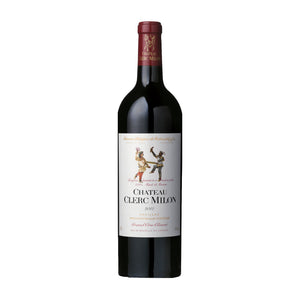
Magnum 1.5 L · By the bottle
€178,80 -
Château du Tertre 2012
Magnum 1.5 L · Wooden crate of 6
Regular price €496,80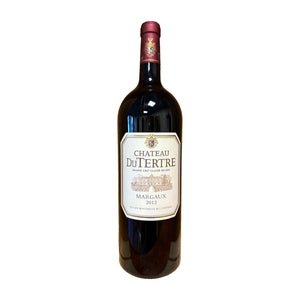
Magnum 1.5 L · Wooden crate of 6
€82,80 per bottle
€496,80 -
2010 Château Figeac
Magnum 1.5 L · Wooden crate of 6
Regular price €2.908,80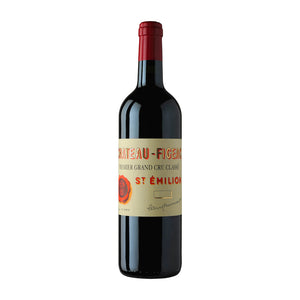
Magnum 1.5 L · Wooden crate of 6
€484,80 per bottle
€2.908,80 -
2012 Château Giscours
Magnum 1.5 L · Wooden crate of 6
Regular price €712,80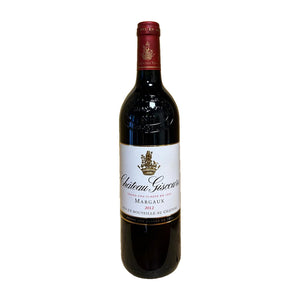
Magnum 1.5 L · Wooden crate of 6
€118,80 per bottle
€712,80 -
Château Haut-Bages Libéral 1990
Jeroboam 5 L · By the bottle
Regular price €326,40
Jeroboam 5 L · By the bottle
€326,40 -
Château Haut-Marbuzet 2010
Regular price €748,80
Bottle 75 cl · Wooden case of 12
€62,40 per bottle
€748,80Magnum 1.5 L · Wooden crate of 6
€136,80 per bottle
€820,80 -
Château Montrose 1988
Imperial 6 L · By the bottle
Regular price €1.202,40
Imperial 6 L · By the bottle
€1.202,40 -
Château Phélan Ségur 2018
Regular price €532,80
Bottle 75 cl · Wooden case of 12
€44,40 per bottle
€532,80Magnum 1.5 L · Wooden crate of 6
€88,80 per bottle
€532,80 -
Château Prieuré-Lichine 2003
Magnum 1.5 L · Wooden crate of 6
Regular price €640,80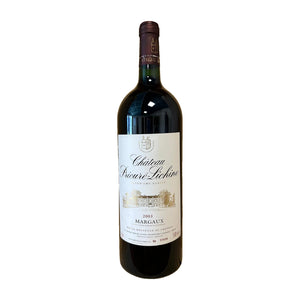
Magnum 1.5 L · Wooden crate of 6
€106,80 per bottle
€640,80 -
Château Sociando-Mallet 2004
Magnum 1.5 L · Wooden crate of 6
Regular price €489,60
Magnum 1.5 L · Wooden crate of 6
€81,60 per bottle
€489,60 -
Deutz Amour de Deutz 2009
Magnum 1.5 L · By the bottle
Regular price €268,80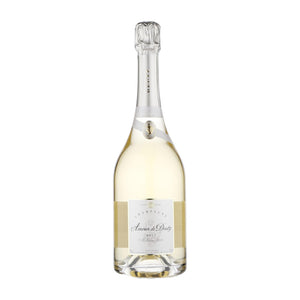
Magnum 1.5 L · By the bottle
€268,80 -
Domaine de Chevalier red 2014
Magnum 1.5 L · Wooden crate of 6
Regular price €784,80
Magnum 1.5 L · Wooden crate of 6
€130,80 per bottle
€784,80


The same wine ages more slowly and more reliably in a magnum than in a standard bottle. It does not necessarily cost more per liter, but it requires an occasion that measures up.
Why wine ages better in a magnum
Under the cork, there is roughly the same small volume of air in a standard bottle as in a magnum, but there is twice as much wine in the magnum. The oxygen that causes the wine to evolve therefore acts more slowly. The large mass of liquid also dampens temperature fluctuations. The result: the same wine, at the same age, appears younger in a magnum, and it stays at its peak for longer.
Conversely, the half-bottle evolves faster: convenient for tasting a cellar-worthy wine before opening the full-size bottles, but bad for waiting twenty years. Our "When to open this bottle" tool takes the format into account in its dates.
Bordeaux formats
| Format | Capacity | Equivalent to | Glasses |
|---|---|---|---|
| Half-bottle | 37.5 cl | ½ bottle | 3 |
| Bottle | 75 cl | 1 bottle | 6 |
| Magnum | 1.5 L | 2 bottles | 12 |
| Double magnum | 3 L | 4 bottles | 24 |
| Jeroboam | 5 L | 6 ⅔ bottles | 40 |
| Imperial | 6 L | 8 bottles | 48 |
Be careful with the names: in Champagne, a Jeroboam contains 3 liters (the Bordeaux double magnum), and the 6-liter bottle is called a Methuselah. For wedding champagne in magnums, see our wedding champagne page.
When to choose a large format
- For aging twenty years or more. The magnum is the quintessential cellar format: it protects great vintages and birth-year wines. See "birth-year wine to keep for 18 years."
- For a large table. Twelve glasses of the same wine, served to everyone at the same time: a magnum for ten or twelve guests creates an effect that six bottles cannot match.
- To mark a special date. A Jeroboam or an Imperial is kept for a wedding, a milestone birthday, or a family celebration. You need forty guests or more to finish it the same evening.
- Not for a wine to drink quickly. A simple Bordeaux or a rosé gains nothing from a large format, other than the table effect.
Frequently asked questions
Does a magnum cost more than two bottles?
Not always. From a wine merchant, a magnum of a standard wine often costs the price of two bottles, give or take a few euros for the glass and cork. For sought-after fine wines, and for resale, the magnum commands a premium.
How do you serve a magnum or a Jeroboam?
Upright the day before, opened one to two hours before for a young wine, and served with two hands, holding the base. A Jeroboam is easier to serve after decanting into two or three decanters: see carafe or decant.
How do you store large formats in a cellar?
Lying down, like standard bottles, but on a flat shelf or in their wooden crate: they do not fit in standard racks. The original crate also protects from light and facilitates potential resale.
Are all wines available in magnums?
Most Grand Crus Classés and many Crus Bourgeois bottle a portion of each vintage in magnums; larger formats are produced in small quantities and not every year. Ask us: we can tell you what is available for the wine and year you are looking for.
Can't find your wine?
The shop shows only part of what we can offer. As a Bordeaux wholesaler, Transvins works with the châteaux and the Bordeaux trade: tell us the wine and vintage you are after, we will look for it and reply with availability and price.