


Collection: Pessac-Léognan
-
Château Carbonnieux white 2021
Bottle 75 cl · Wooden case of 12
Regular price €410,40
Bottle 75 cl · Wooden case of 12
€34,20 per bottle
€410,40 -
Château Carbonnieux white 2022
Bottle 75 cl · Wooden crate of 6
Regular price €198,00
Bottle 75 cl · Wooden crate of 6
€33,00 per bottle
€198,00 -
Château Carbonnieux white 2023
Bottle 75 cl · Wooden case of 12
Regular price €374,40
Bottle 75 cl · Wooden case of 12
€31,20 per bottle
€374,40 -
2016 Château Carbonnieux red
Bottle 75 cl · Wooden case of 12
Regular price €489,60
Bottle 75 cl · Wooden case of 12
€40,80 per bottle
€489,60 -
2017 Château Carbonnieux red
Bottle 75 cl · Wooden case of 12
Regular price €388,80
Bottle 75 cl · Wooden case of 12
€32,40 per bottle
€388,80 -
Château Carbonnieux red 2018
Bottle 75 cl · Wooden case of 12
Regular price €453,60
Bottle 75 cl · Wooden case of 12
€37,80 per bottle
€453,60 -
2019 Château Carbonnieux red
Bottle 75 cl · Wooden case of 12
Regular price €388,80
Bottle 75 cl · Wooden case of 12
€32,40 per bottle
€388,80 -
2020 Château Carbonnieux Red
Bottle 75 cl · Wooden case of 12
Regular price €381,60
Bottle 75 cl · Wooden case of 12
€31,80 per bottle
€381,60 -
Château Clos Marsalette 2015
Bottle 75 cl · Wooden case of 12
Regular price €288,00
Bottle 75 cl · Wooden case of 12
€24,00 per bottle
€288,00 -
Château Clos Marsalette 2016
Bottle 75 cl · Wooden case of 12
Regular price €288,00
Bottle 75 cl · Wooden case of 12
€24,00 per bottle
€288,00 -
Château Clos Marsalette 2019
Bottle 75 cl · Wooden case of 12
Regular price €259,20
Bottle 75 cl · Wooden case of 12
€21,60 per bottle
€259,20 -
Château Gazin Roquencourt 2009
Bottle 75 cl · Wooden case of 12
Regular price €316,80
Bottle 75 cl · Wooden case of 12
€26,40 per bottle
€316,80 -
Château Gazin Roquencourt 2011
Bottle 75 cl · Wooden case of 12
Regular price €252,00
Bottle 75 cl · Wooden case of 12
€21,00 per bottle
€252,00 -
Château Gazin Roquencourt 2012
Bottle 75 cl · Wooden case of 12
Regular price €244,80
Bottle 75 cl · Wooden case of 12
€20,40 per bottle
€244,80 -
Château Haut-Bailly 2008
Bottle 75 cl · Wooden crate of 6
Regular price €662,40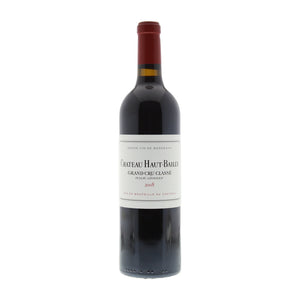
Bottle 75 cl · Wooden crate of 6
€110,40 per bottle
€662,40 -
Château Haut-Bailly 2011
Bottle 75 cl · Wooden case of 12
Regular price €1.108,80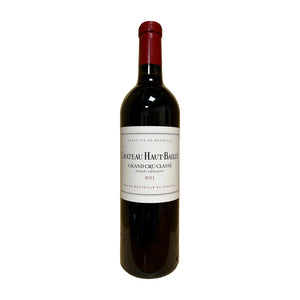
Bottle 75 cl · Wooden case of 12
€92,40 per bottle
€1.108,80 -
Château Haut-Bailly 2018
Bottle 75 cl · Wooden crate of 6
Regular price €734,40
Bottle 75 cl · Wooden crate of 6
€122,40 per bottle
€734,40 -
1986 Château Haut-Brion
Bottle 75 cl · By the bottle
Regular price €602,40
Bottle 75 cl · By the bottle
€602,40 -
Château Haut-Brion 2002
Bottle 75 cl · By the bottle
Regular price €398,40
Bottle 75 cl · By the bottle
€398,40 -
Château La Mission Haut-Brion 2012
Bottle 75 cl · Wooden crate of 3
Regular price €727,20
Bottle 75 cl · Wooden crate of 3
€242,40 per bottle
€727,20


20 of 62 wines
Load moreGraves · Pessac-Léognan appellation · 16 classified growths, red and white
Red and white, classified and unclassified
The only major Bordeaux appellation where dry red and white wines are classified side by side.
Premier cru and neighbors
Haut-Brion, the only red classified in 1855 outside the Médoc, is a premier cru, and La Mission Haut-Brion, from the same family, is also one: very long-lived wines.
Red classified growths
Smith Haut Lafitte, Pape Clément, Haut-Bailly, Malartic-Lagravière: ready after about eight years, with twenty-five years of aging potential.
Red and white classified growths
Domaine de Chevalier, Latour-Martillac, Carbonnieux: the white with fish, the red with meat, all from a single estate.
Unclassified and second wines
Larrivet Haut-Brion, Lespault-Martillac, Gazin Roquencourt, Clos Marsalette, Clémentin, and Malartic's Réserve: the appellation's style at a lower price.
What makes a Pessac-Léognan
Created in 1987, the appellation covers the northern Graves, from the suburbs of Bordeaux (Pessac, Talence) to the pine forests of Léognan and Martillac. The soils are gravelly, like those in the Médoc, but the reds contain more merlot, making them softer. The whites, made from barrel-aged sauvignon blanc and sémillon, are among the few dry Bordeaux whites that age for twenty years.
The Graves classification, established in 1953 and revised in 1959, includes sixteen châteaux, all now in Pessac-Léognan; each is classified for its red, its white, or both. To the north, on the other side of the city, the Médoc begins: see the wines of Margaux.
What to serve it with
- A young white: oysters and seafood (what wine with oysters), grilled fish (what wine with fish).
- A ten-year-old white: turbot, lobster, creamy poultry dishes (what wine with poultry).
- A red: lamb (what wine with lamb), ribeye steak (what wine with beef), and game birds for older vintages (what wine with game).
Which Pessac-Léognan for which occasion
For a wedding or a special meal, a white and a red from the same château: see which Bordeaux is best for a wedding. For New Year's Eve, the white with oysters and pan-seared foie gras, the red with poultry (what wine with the Christmas menu). For a birthday, the birth year (birth vintage).
Frequently Asked Questions
What are the classified growths of Pessac-Léognan?
Sixteen châteaux are included in the 1953 Graves classification, revised in 1959, each classified for its red, its white, or both. Haut-Brion is also a premier grand cru classé from 1855, the only red outside the Médoc.
Pessac-Léognan or Graves?
Pessac-Léognan is the northern part of the Graves, which became a separate appellation in 1987; all the classified growths of the Graves are located there. The Graves appellation covers the rest, further south, with wines that are generally simpler and less expensive.
How long should a Pessac-Léognan be kept?
Three to ten years for a second wine or a simple white, six to twenty for a red classified growth, and fifteen to fifty for Haut-Brion. The great whites, such as that from Domaine de Chevalier, last twenty years.
On-site: a day in Pessac-Léognan, the châteaux that welcome visitors, where to have lunch, and picking up your order in Bordeaux on your return.
Can't find your wine?
The shop shows only part of what we can offer. As a Bordeaux wholesaler, Transvins works with the châteaux and the Bordeaux trade: tell us the wine and vintage you are after, we will look for it and reply with availability and price.