


Collection: 1855 Classified Growths
-
Château Beychevelle 1961
Half-bottle 37.5 cl · By the bottle
Regular price €302,40
Half-bottle 37.5 cl · By the bottle
€302,40 -
Château Beychevelle 1996
Bottle 75 cl · By the bottle
Regular price €128,40
Bottle 75 cl · By the bottle
€128,40 -
2008 Château Beychevelle
Bottle 75 cl · Wooden case of 12
Regular price €1.252,80
Bottle 75 cl · Wooden case of 12
€104,40 per bottle
€1.252,80 -
Château Beychevelle 2016
Magnum 1.5 L · Individual wooden crate
Regular price €244,80
Magnum 1.5 L · Individual wooden crate
€244,80 -
Château Beychevelle 2017
Bottle 75 cl · Wooden crate of 6
Regular price €583,20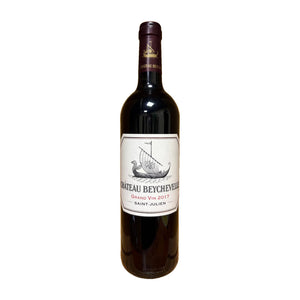
Bottle 75 cl · Wooden crate of 6
€97,20 per bottle
€583,20 -
2018 Château Beychevelle
Bottle 75 cl · Wooden crate of 6
Regular price €604,80
Bottle 75 cl · Wooden crate of 6
€100,80 per bottle
€604,80 -
Château Beychevelle 2019
Bottle 75 cl · Wooden crate of 6
Regular price €554,40
Bottle 75 cl · Wooden crate of 6
€92,40 per bottle
€554,40 -
Château Beychevelle 2022
Regular price €554,40
Bottle 75 cl · Wooden crate of 6
€92,40 per bottle
€554,40Bottle 75 cl · Wooden case of 12
€92,40 per bottle
€1.108,80 -
Château Branaire-Ducru 2014
Bottle 75 cl · Wooden crate of 6
Regular price €295,20
Bottle 75 cl · Wooden crate of 6
€49,20 per bottle
€295,20 -
2015 Château Branaire-Ducru
Bottle 75 cl · Wooden case of 12
Regular price €676,80
Bottle 75 cl · Wooden case of 12
€56,40 per bottle
€676,80 -
2016 Château Branaire-Ducru
Bottle 75 cl · Wooden case of 12
Regular price €720,00
Bottle 75 cl · Wooden case of 12
€60,00 per bottle
€720,00 -
Château Branaire-Ducru 2019
Bottle 75 cl · Wooden case of 12
Regular price €547,20
Bottle 75 cl · Wooden case of 12
€45,60 per bottle
€547,20 -
Château Branaire-Ducru 2020
Bottle 75 cl · Wooden case of 12
Regular price €576,00
Bottle 75 cl · Wooden case of 12
€48,00 per bottle
€576,00 -
Château Brane-Cantenac 2013
Bottle 75 cl · Wooden crate of 6
Regular price €345,60
Bottle 75 cl · Wooden crate of 6
€57,60 per bottle
€345,60 -
Château Brane-Cantenac 2015
Bottle 75 cl · Wooden crate of 6
Regular price €482,40
Bottle 75 cl · Wooden crate of 6
€80,40 per bottle
€482,40 -
Château Brane-Cantenac 2017
Bottle 75 cl · Wooden case of 12
Regular price €576,00
Bottle 75 cl · Wooden case of 12
€48,00 per bottle
€576,00 -
Château Camensac 2014
Bottle 75 cl · Wooden case of 12
Regular price €316,80
Bottle 75 cl · Wooden case of 12
€26,40 per bottle
€316,80 -
Château Camensac 2015
Bottle 75 cl · Wooden case of 12
Regular price €309,60
Bottle 75 cl · Wooden case of 12
€25,80 per bottle
€309,60 -
Château Camensac 2016
Bottle 75 cl · Wooden case of 12
Regular price €316,80
Bottle 75 cl · Wooden case of 12
€26,40 per bottle
€316,80 -
Château Camensac 2018
Bottle 75 cl · Wooden case of 12
Regular price €302,40
Bottle 75 cl · Wooden case of 12
€25,20 per bottle
€302,40


20 of 162 wines
Load moreMédoc and Sauternes, 1855
Established for the Paris Universal Exposition based on wine selling prices. Sixty-one reds in five growths, all from the Médoc except for Haut-Brion in the Graves, and twenty-seven sweet wines in three ranks. It has only changed twice: Cantemerle was added in 1856, and Mouton Rothschild was promoted to first growth in 1973. It classifies brands: a château may have bought or sold vines since then. See Pauillac, Margaux, Saint-Julien, Saint-Estèphe, and Sauternes.
What a classification does not say
A rank is an indication of lineage, not a tasting score. Several fifth growths of the Médoc today sell for more than second growths; some Crus Bourgeois are worth more than Crus Classés. The vintage matters just as much: a Cru Classé from a poor year may be disappointing compared to a Cru Bourgeois from a great one. The vintage chart and the "when to open this bottle" tool help in choosing the right year. To find out where to read the classification on a bottle, see reading a Bordeaux label.
Frequently asked questions
Can the 1855 classification change?
In principle, no: it has only been modified twice, in 1856 and 1973. It remains the reference for the Médoc, even if today's prices no longer strictly follow the order of the ranks.
Why is Haut-Brion in the Médoc classification?
In 1855, its reputation and prices were on par with the greatest Médoc wines; it was classified as a First Growth alongside them, despite being located in Pessac, in the Graves. It has also been a Cru Classé de Graves since 1959.
Is a second wine classified?
No. The classification applies to the château's main wine (grand vin). The second wine benefits from the same terroir and the same team, at a much gentler price: see the second wines of great châteaux.
Can't find your wine?
The shop shows only part of what we can offer. As a Bordeaux wholesaler, Transvins works with the châteaux and the Bordeaux trade: tell us the wine and vintage you are after, we will look for it and reply with availability and price.