


Collection: Sauternes
-
Château d’Yquem 1999
Bottle 75 cl · By the bottle
Regular price €356,40
Bottle 75 cl · By the bottle
€356,40 -
Château d’Yquem 2003
Bottle 75 cl · By the bottle
Regular price €374,40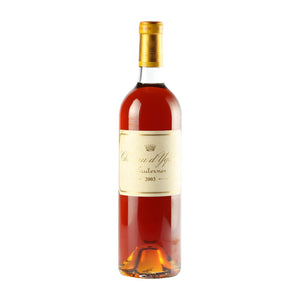
Bottle 75 cl · By the bottle
€374,40 -
Château d’Yquem 2006
Bottle 75 cl · By the bottle
Regular price €386,40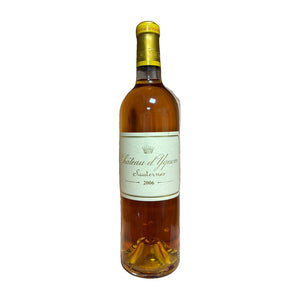
Bottle 75 cl · By the bottle
€386,40 -
Château Gilette Crème de Tête 1970
Bottle 75 cl · By the bottle
Regular price €146,40
Bottle 75 cl · By the bottle
€146,40 -
Château Gilette Crème de Tête 1975
Bottle 75 cl · By the bottle
Regular price €218,40
Bottle 75 cl · By the bottle
€218,40 -
Château Rieussec 1976
Bottle 75 cl · By the bottle
Regular price €122,40
Bottle 75 cl · By the bottle
€122,40 -
2008 Château Rieussec
Bottle 75 cl · Wooden case of 12
Regular price €532,80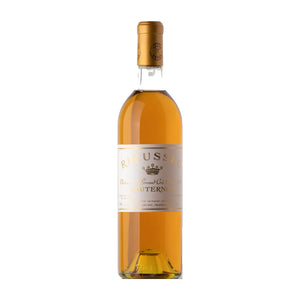
Bottle 75 cl · Wooden case of 12
€44,40 per bottle
€532,80 -
Château Sigalas Rabaud 1976
Bottle 75 cl · By the bottle
Regular price €122,40
Bottle 75 cl · By the bottle
€122,40 -
Château Suduiraut Crème de Tête 1989
Bottle 75 cl · By the bottle
Regular price €266,40
Bottle 75 cl · By the bottle
€266,40


Graves · Sauternes and Barsac appellations · 1855 classification
What makes a Sauternes
South of the Graves, where the cooler Ciron river meets the Garonne: autumn mists and warm afternoons promote noble rot, a fungus that concentrates the sugar in the grapes. Mainly Sémillon, with Sauvignon Blanc and a little Muscadelle. The grapes are harvested in several passes as they ripen: low yields and wines that age longer than almost any red.
What to serve it with
- Foie gras, as a starter (what wine with foie gras).
- Roquefort and blue cheeses (what wine with cheese).
- Desserts with yellow or exotic fruits, not too sweet (what wine with dessert).
Which Sauternes for which occasion
For a birthday, a Sauternes from the birth year: it is one of the wines that best withstands fifty years in the cellar (birth vintage). For New Year's Eve, with foie gras (what wine with the Christmas menu). Allow one bottle for eight to ten glasses: sweet wine is served in small quantities.
Frequently Asked Questions
Should a Sauternes be drunk with dessert?
Not necessarily. In France, it is often served with foie gras at the beginning of the meal; elsewhere, at the end of the meal or on its own. Both work; just avoid very sweet desserts, which overpower it.
Is an old Sauternes still good?
Often, yes. Well stored, a forty- or fifty-year-old Sauternes has taken on an amber colour and notes of honey, candied orange and spices. It is the wine of the oldest birth vintages.
At what temperature should it be served?
Around 8–10°C for a young one, 10–12°C for an old vintage, which needs a little warmth to open up.
On site: a day in Sauternes and Barsac, the châteaux that welcome visitors, where to have lunch, and the collection of your order in Bordeaux on your return.
Can't find your wine?
The shop shows only part of what we can offer. As a Bordeaux wholesaler, Transvins works with the châteaux and the Bordeaux trade: tell us the wine and vintage you are after, we will look for it and reply with availability and price.