


Collection: Libournais
-
Château Quinault l’Enclos 2014
Bottle 75 cl · Wooden crate of 6
Regular price €194,40
Bottle 75 cl · Wooden crate of 6
€32,40 per bottle
€194,40 -
Château Quinault l’Enclos 2016
Bottle 75 cl · Wooden crate of 6
Regular price €230,40
Bottle 75 cl · Wooden crate of 6
€38,40 per bottle
€230,40 -
Château Quinault l’Enclos 2018
Bottle 75 cl · Wooden case of 12
Regular price €432,00
Bottle 75 cl · Wooden case of 12
€36,00 per bottle
€432,00 -
Château Soutard 2013
Bottle 75 cl · Wooden case of 12
Regular price €331,20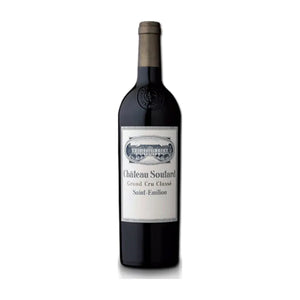
Bottle 75 cl · Wooden case of 12
€27,60 per bottle
€331,20 -
Château Soutard 2014
Bottle 75 cl · Wooden case of 12
Regular price €381,60
Bottle 75 cl · Wooden case of 12
€31,80 per bottle
€381,60 -
Château Soutard 2016
Bottle 75 cl · Wooden case of 12
Regular price €590,40
Bottle 75 cl · Wooden case of 12
€49,20 per bottle
€590,40 -
Château Troplong Mondot 1990
Bottle 75 cl · By the bottle
Regular price €338,40
Bottle 75 cl · By the bottle
€338,40 -
Château Troplong Mondot 2004
Bottle 75 cl · Wooden case of 12
Regular price €1.108,80
Bottle 75 cl · Wooden case of 12
€92,40 per bottle
€1.108,80 -
Château Troplong Mondot 2010
Bottle 75 cl · Wooden crate of 6
Regular price €936,00
Bottle 75 cl · Wooden crate of 6
€156,00 per bottle
€936,00 -
Château Troplong Mondot 2011
Bottle 75 cl · Wooden case of 12
Regular price €1.108,80
Bottle 75 cl · Wooden case of 12
€92,40 per bottle
€1.108,80 -
Château Troplong Mondot 2014
Bottle 75 cl · Wooden case of 12
Regular price €1.108,80
Bottle 75 cl · Wooden case of 12
€92,40 per bottle
€1.108,80 -
2015 Château Troplong Mondot
Bottle 75 cl · Wooden case of 12
Regular price €1.396,80
Bottle 75 cl · Wooden case of 12
€116,40 per bottle
€1.396,80 -
Château Troplong Mondot 2020
Bottle 75 cl · Wooden case of 12
Regular price €1.180,80
Bottle 75 cl · Wooden case of 12
€98,40 per bottle
€1.180,80 -
Château Valandraud 1995
Bottle 75 cl · By the bottle
Regular price €338,40
Bottle 75 cl · By the bottle
€338,40 -
Château Valandraud 1998
Bottle 75 cl · By the bottle
Regular price €278,40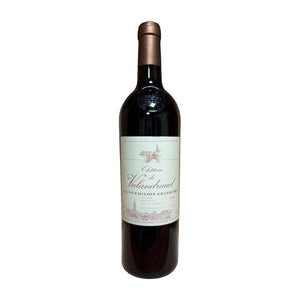
Bottle 75 cl · By the bottle
€278,40 -
Domaine Gonzague Maurice La Folie 2018
Bottle 75 cl · Pack of 6
Regular price €82,80
Bottle 75 cl · Pack of 6
€13,80 per bottle
€82,80 -
Pétrus 2003
Bottle 75 cl · By the bottle
Regular price €3.602,40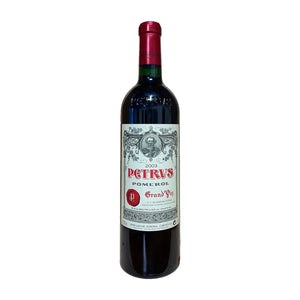
Bottle 75 cl · By the bottle
€3.602,40 -
Pétrus 2011
Bottle 75 cl · By the bottle
Regular price €3.242,40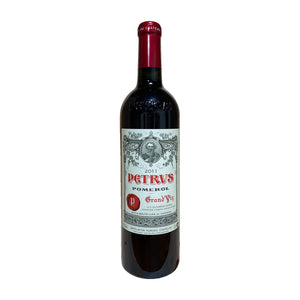
Bottle 75 cl · By the bottle
€3.242,40 -
Vieux Château Certan 1996
Bottle 75 cl · By the bottle
Regular price €182,40
Bottle 75 cl · By the bottle
€182,40


79 of 79 wines
Right Bank · Libournais · Saint-Émilion, Pomerol
Around Libourne, on the right bank of the Dordogne, Merlot dominates: these wines are rounder and ready to drink sooner than those of the Médoc. Saint-Émilion and Pomerol are its two great names.
The Appellations
Around Libourne:
Saint-Émilion Grand Cru
Around the medieval village listed by UNESCO, on the plateau and limestone hillsides. Merlot and Cabernet Franc. Its classification is revised approximately every ten years. Saint-Émilion Grand Cru wines
Pomerol
Approximately 800 hectares northeast of Libourne, with often tiny estates and no classification. Merlot dominates here more than anywhere else: round, velvety wines, with Pétrus at the forefront. Pomerol wines
Montagne-Saint-Émilion
The largest of the satellites, north of the Barbanne stream: the same Merlot, ready sooner, for less money. Montagne-Saint-Émilion wines
What makes a Libournais wine
Clay and limestone soils, cooler than the gravel of the Médoc, where Merlot ripens better than Cabernet Sauvignon. Merlot dominates, along with Cabernet Franc: wines that are round and supple when young, and age for a long time on the best terroirs, the limestone plateau of Saint-Émilion and the plateau of Pomerol. To the east, Castillon Côtes de Bordeaux is an extension of the limestone hillsides of Saint-Émilion.
No château on the Right Bank is included in the 1855 classification. Saint-Émilion has had its own since 1955, revised approximately every ten years; the 2022 edition is valid until 2032. Pomerol has none. The details are on the Bordeaux classifications page.
Frequently asked questions
Saint-Émilion or Saint-Émilion Grand Cru?
Two appellations for the same area: the Grand Cru has stricter requirements, and it alone can be classified. On a label, "Grand Cru" denotes the appellation, while "Grand Cru Classé" denotes the classification.
Why does Pomerol have no classification?
One was never established there. Reputation and prices take the place of a rank, with Pétrus at the lead.
How long should a Saint-Émilion or Pomerol be kept?
Three to ten years for a simple wine, five to twenty for a Grand Cru Classé or a wine from the Pomerol slopes, eight to thirty for the Premiers Grands Crus and the wines of the plateau, and longer for Ausone or Pétrus.
Right Bank or Left Bank?
The Right Bank is primarily planted with Merlot on clay and limestone: rounder wines that are ready to drink sooner. The Left Bank is primarily planted with Cabernet Sauvignon on gravel: see Médoc wines.
Can't find your wine?
The shop shows only part of what we can offer. As a Bordeaux wholesaler, Transvins works with the châteaux and the Bordeaux trade: tell us the wine and vintage you are after, we will look for it and reply with availability and price.