


Collection: Margaux
-
Brio de Cantenac Brown 2013
Bottle 75 cl · Wooden case of 12
Regular price €288,00
Bottle 75 cl · Wooden case of 12
€24,00 per bottle
€288,00 -
Brio de Cantenac Brown 2017
Bottle 75 cl · Wooden case of 12
Regular price €288,00
Bottle 75 cl · Wooden case of 12
€24,00 per bottle
€288,00 -
Château Brane-Cantenac 2013
Bottle 75 cl · Wooden crate of 6
Regular price €345,60
Bottle 75 cl · Wooden crate of 6
€57,60 per bottle
€345,60 -
Château Brane-Cantenac 2015
Bottle 75 cl · Wooden crate of 6
Regular price €482,40
Bottle 75 cl · Wooden crate of 6
€80,40 per bottle
€482,40 -
Château Brane-Cantenac 2017
Bottle 75 cl · Wooden case of 12
Regular price €576,00
Bottle 75 cl · Wooden case of 12
€48,00 per bottle
€576,00 -
Château Cantenac Brown 2016
Bottle 75 cl · Wooden case of 12
Regular price €662,40
Bottle 75 cl · Wooden case of 12
€55,20 per bottle
€662,40 -
Château Cantenac Brown 2019
Bottle 75 cl · Wooden case of 12
Regular price €532,80
Bottle 75 cl · Wooden case of 12
€44,40 per bottle
€532,80 -
Château Cantenac Brown 2020
Bottle 75 cl · Wooden case of 12
Regular price €576,00
Bottle 75 cl · Wooden case of 12
€48,00 per bottle
€576,00 -
Château du Tertre 2012
Magnum 1.5 L · Wooden crate of 6
Regular price €496,80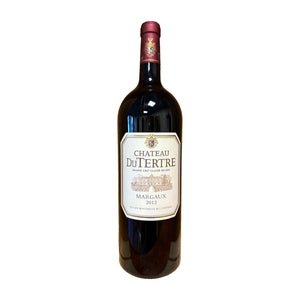
Magnum 1.5 L · Wooden crate of 6
€82,80 per bottle
€496,80 -
Château du Tertre 2015
Bottle 75 cl · Wooden case of 12
Regular price €576,00
Bottle 75 cl · Wooden case of 12
€48,00 per bottle
€576,00 -
Château du Tertre 2016
Bottle 75 cl · Wooden case of 12
Regular price €504,00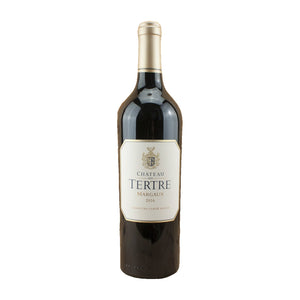
Bottle 75 cl · Wooden case of 12
€42,00 per bottle
€504,00 -
Château du Tertre 2017
Bottle 75 cl · Wooden case of 12
Regular price €417,60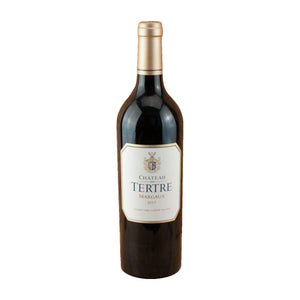
Bottle 75 cl · Wooden case of 12
€34,80 per bottle
€417,60 -
Château du Tertre 2018
Bottle 75 cl · Wooden case of 12
Regular price €518,40
Bottle 75 cl · Wooden case of 12
€43,20 per bottle
€518,40 -
Château Durfort-Vivens 2008
Bottle 75 cl · Wooden crate of 6
Regular price €338,40
Bottle 75 cl · Wooden crate of 6
€56,40 per bottle
€338,40 -
2006 Château Giscours
Bottle 75 cl · Wooden case of 12
Regular price €864,00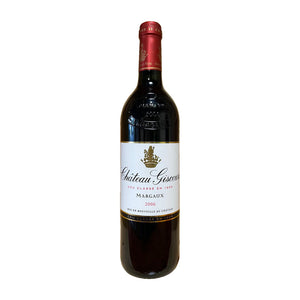
Bottle 75 cl · Wooden case of 12
€72,00 per bottle
€864,00 -
2008 Château Giscours
Bottle 75 cl · Wooden case of 12
Regular price €820,80
Bottle 75 cl · Wooden case of 12
€68,40 per bottle
€820,80 -
2012 Château Giscours
Magnum 1.5 L · Wooden crate of 6
Regular price €712,80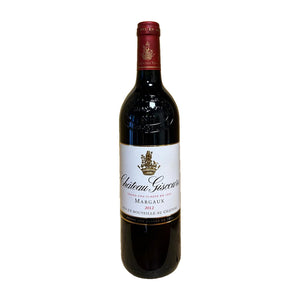
Magnum 1.5 L · Wooden crate of 6
€118,80 per bottle
€712,80 -
2018 Château Giscours
Bottle 75 cl · Wooden case of 12
Regular price €741,60
Bottle 75 cl · Wooden case of 12
€61,80 per bottle
€741,60 -
Château Giscours 2022
Bottle 75 cl · Wooden case of 12
Regular price €878,40
Bottle 75 cl · Wooden case of 12
€73,20 per bottle
€878,40 -
Château Lascombes 2010
Bottle 75 cl · Wooden case of 12
Regular price €1.209,60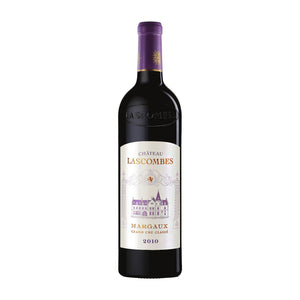
Bottle 75 cl · Wooden case of 12
€100,80 per bottle
€1.209,60


20 of 53 wines
Load moreMédoc · Margaux appellation · 21 estates classified in 1855
From second wine to first growth
The same appellation, four uses.
Second wines
Brio de Cantenac Brown, la Sirène de Giscours, Confidence de Prieuré-Lichine: the younger vines of a classified growth, ready after three or four years. The Margaux for a wedding meal, served to a hundred people.
Bourgeois and unclassified growths
Monbrison: the style of the appellation without the price of a classified growth. Drink between five and fifteen years, at a family table.
Fourth and fifth growths
Prieuré-Lichine, Marquis de Terme, du Tertre: classified growths that can be drunk from six years on. The good value between the name on the label and the price of the case.
At the top, Château Margaux, the only first growth of the appellation and one of the five first growths of the Médoc and Graves. A very long-aged wine, drunk from old vintages and given as a gift more than served at the table.
What makes a Margaux
The appellation covers five communes in the south of the Médoc, Margaux, Cantenac, Soussans, Labarde and Arsac (to the south, the Haut-Médoc and La Lagune), on about 1,500 hectares of slopes of lean gravel. Cabernet-sauvignon dominates, with merlot, a little petit verdot and cabernet franc. The soil, lighter than that of Pauillac or Saint-Estèphe, produces more fragrant and finer wines, with softer tannins, which often open earlier than their northern neighbors.
Just to the north begins Saint-Julien, more structured: see the wines of Saint-Julien; the Château Talbot page gives an example, vintage by vintage.
What to serve it with
- A great Margaux of ten years or more: rosé lamb, leg of lamb, saddle (see what wine with lamb), game birds for old vintages (what wine with game).
- A classified growth of five to ten years: fillet of beef, crusted or roasted, whose finesse matches that of the wine (what wine with beef).
- A second wine or a bourgeois growth: grilled meats, roast poultry, a platter of pressed-paste cheeses rather than blues (what wine with cheese).
Which Margaux for which occasion
For a wedding, a second wine or a fifth growth at every table, and a higher-ranked growth for the head table: the what Bordeaux for a wedding page compares the appellations, and second wine of a great château says when this choice is the right one. As a gift, a Margaux ready to drink in its original wooden case (see what wine to give), and for clients, the end-of-year client gifts page calculates it by recipient.
Frequently asked questions
What is the difference between a Margaux and Château Margaux?
Margaux is the appellation, shared by about sixty estates. Château Margaux is one of them, the only first growth classified of the appellation. Every Château Margaux is a Margaux; the reverse is not true, and the price reminds you. Its second wine is called Pavillon Rouge.
How many classified growths does the Margaux appellation count?
Twenty-one in the 1855 classification, more than any other appellation in the Médoc: one first, five seconds, ten thirds, three fourths and two fifths. The second wines of these châteaux are not classified: the classification applies to the grand vin alone.
How long to keep a Margaux?
Three to twelve years for a second wine, five to fifteen for a bourgeois growth, six to twenty for a fourth or fifth growth, eight to twenty-five for a second or third, much longer for Château Margaux. A little more in a great year, a little less in a weak year or in a half-bottle.
Is there a white Margaux?
No. The Margaux appellation only applies to red wines. The few whites produced by its châteaux, such as the Pavillon Blanc de Château Margaux, come out under the Bordeaux appellation.
On site: a day in Margaux, the châteaux that receive visitors, where to have lunch, and the pickup of your order in Bordeaux on the return.
Can't find your wine?
The shop shows only part of what we can offer. As a Bordeaux wholesaler, Transvins works with the châteaux and the Bordeaux trade: tell us the wine and vintage you are after, we will look for it and reply with availability and price.