


Collection: Médoc
-
Château Gruaud Larose 1986
Bottle 75 cl · By the bottle
Regular price €236,40
Bottle 75 cl · By the bottle
€236,40 -
Château Gruaud Larose 2011
Bottle 75 cl · Wooden crate of 6
Regular price €432,00
Bottle 75 cl · Wooden crate of 6
€72,00 per bottle
€432,00 -
2014 Château Gruaud Larose
Bottle 75 cl · Wooden crate of 6
Regular price €446,40
Bottle 75 cl · Wooden crate of 6
€74,40 per bottle
€446,40 -
Château Haut-Bages Libéral 1990
Jeroboam 5 L · By the bottle
Regular price €326,40
Jeroboam 5 L · By the bottle
€326,40 -
Château Haut-Batailley 2010
Bottle 75 cl · Wooden case of 12
Regular price €792,00
Bottle 75 cl · Wooden case of 12
€66,00 per bottle
€792,00 -
Château Haut-Batailley 2014
Bottle 75 cl · Wooden case of 12
Regular price €460,80
Bottle 75 cl · Wooden case of 12
€38,40 per bottle
€460,80 -
Château Haut-Marbuzet 2010
Regular price €748,80
Bottle 75 cl · Wooden case of 12
€62,40 per bottle
€748,80Magnum 1.5 L · Wooden crate of 6
€136,80 per bottle
€820,80 -
Château Haut-Marbuzet 2016
Bottle 75 cl · Wooden case of 12
Regular price €561,60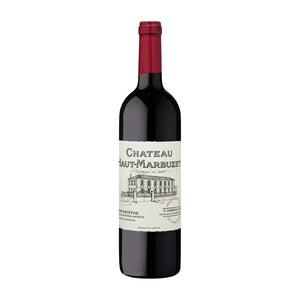
Bottle 75 cl · Wooden case of 12
€46,80 per bottle
€561,60 -
Château Haut-Marbuzet 2018
Bottle 75 cl · Wooden case of 12
Regular price €532,80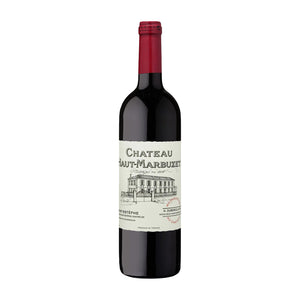
Bottle 75 cl · Wooden case of 12
€44,40 per bottle
€532,80 -
Château La Croix de Marbuzet 2023
Bottle 75 cl · Pack of 6
Regular price €85,68
Bottle 75 cl · Pack of 6
€14,28 per bottle
€85,68 -
Château La Lagune 2004
Bottle 75 cl · Wooden crate of 6
Regular price €338,40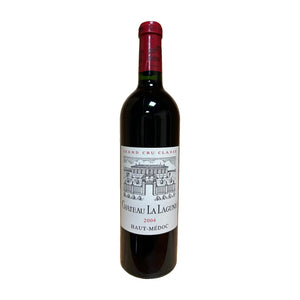
Bottle 75 cl · Wooden crate of 6
€56,40 per bottle
€338,40 -
Château La Lagune 2011
Bottle 75 cl · Wooden case of 12
Regular price €676,80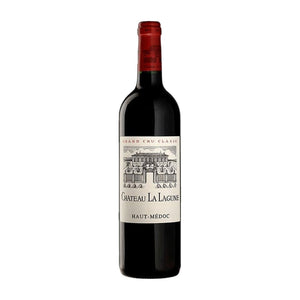
Bottle 75 cl · Wooden case of 12
€56,40 per bottle
€676,80 -
Château La Lagune 2014
Bottle 75 cl · Wooden crate of 6
Regular price €273,60
Bottle 75 cl · Wooden crate of 6
€45,60 per bottle
€273,60 -
Château La Tour Carnet 2015
Bottle 75 cl · Wooden case of 12
Regular price €360,00
Bottle 75 cl · Wooden case of 12
€30,00 per bottle
€360,00 -
Château La Tour Carnet 2016
Bottle 75 cl · Wooden case of 12
Regular price €374,40
Bottle 75 cl · Wooden case of 12
€31,20 per bottle
€374,40 -
Château La Tour Carnet 2017
Bottle 75 cl · Wooden case of 12
Regular price €345,60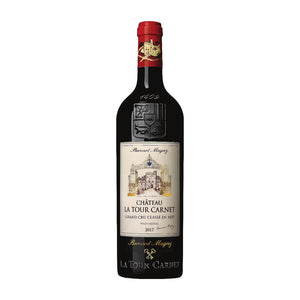
Bottle 75 cl · Wooden case of 12
€28,80 per bottle
€345,60 -
Château La Tour Carnet 2018
Bottle 75 cl · Wooden case of 12
Regular price €374,40
Bottle 75 cl · Wooden case of 12
€31,20 per bottle
€374,40 -
Château Lagrange 2015
Bottle 75 cl · Wooden case of 12
Regular price €676,80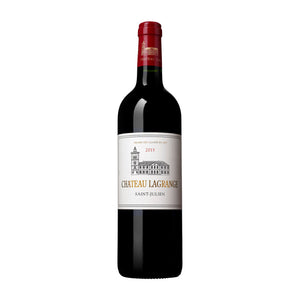
Bottle 75 cl · Wooden case of 12
€56,40 per bottle
€676,80 -
Château Lagrange 2016
Bottle 75 cl · Wooden case of 12
Regular price €648,00
Bottle 75 cl · Wooden case of 12
€54,00 per bottle
€648,00 -
Château Lagrange 2018
Bottle 75 cl · Wooden case of 12
Regular price €561,60
Bottle 75 cl · Wooden case of 12
€46,80 per bottle
€561,60


100 of 214 wines
Load moreLeft Bank · Médoc · six communal appellations
The Médoc is the peninsula north of Bordeaux, between the Gironde estuary and the ocean. It is where Cabernet Sauvignon and Merlot reds are made, and almost all of the 1855 red growth classifications are located there. Here are its appellations, from north to south, and what sets them apart.
The appellations of the Médoc
Six communal appellations: Saint-Estèphe, Pauillac, Saint-Julien, Margaux, Moulis, and Listrac, plus the Haut-Médoc for the rest of the southern half and the Médoc in the north. Here are the ones we offer wines from, listed north to south:
Saint-Estèphe
The northernmost. More clay beneath the gravel: firm, fresh young wines that require a few extra years. Five classed growths, including Cos d'Estournel and Montrose. Saint-Estèphe wines
Pauillac
Deep gravel and the most Cabernet Sauvignon: the most structured wines of the Médoc. Eighteen classed growths, including three of the five first growths. Pauillac wines
Saint-Julien
The smallest of the major communal appellations and the most homogeneous: three-quarters of the vineyard area consists of classed growths. A style between Margaux and Pauillac. Saint-Julien wines
Margaux
Five communes in the south, on lean gravel: the most fragrant and refined wines of the Médoc. Twenty-one classed growths, more than any other appellation. Margaux wines
Moulis-en-Médoc
In the center, inland, with no classed growths: Cru Bourgeois prices for wines that age like classed growths, led by Poujeaux and Chasse-Spleen. Moulis wines
Haut-Médoc
The entire south of the peninsula outside the communal appellations: many Crus Bourgeois and five classed growths, including La Lagune. The Médoc appellation, in the north, is on the same page. Haut-Médoc and Médoc wines
What makes a Médoc wine
Ridges of gravel, pebbles, and sand deposited by the rivers along the estuary: lean soil that drains and warms up, allowing Cabernet Sauvignon to ripen. Merlot accompanies it, with a bit of Cabernet Franc and Petit Verdot. These are long-lived reds: firm tannins when young, cassis and cedar with age. The further one moves from the estuary, the more clay and limestone replace the gravel.
The 1855 classification included sixty-one red wines; all are in the Médoc except one, Haut-Brion, in the Graves. Other châteaux are Crus Bourgeois or unclassified. Details are on the Bordeaux classifications page. The Left Bank continues south of Bordeaux: see Graves and Sauternais wines.
Frequently Asked Questions
What is the difference between Médoc and Haut-Médoc?
Médoc refers to the entire peninsula, and also to an appellation in its northern part. Haut-Médoc is the appellation of the south, outside of the six communal ones. A Pauillac or Margaux is indeed in the geographical Haut-Médoc, but bears the name of its commune.
Left Bank, Right Bank: what's the difference?
The Left Bank, Médoc and Graves, primarily plants Cabernet Sauvignon on gravel: firmer wines that take longer to open up. The Right Bank, Saint-Émilion and Pomerol, primarily plants Merlot on clay and limestone: rounder wines that are ready sooner. See Libournais wines.
How long should I keep a Médoc wine?
Three to twelve years for a second wine, five to fifteen for a Cru Bourgeois, six to twenty-five for a classed growth, and much longer for the first growths. A little longer in a great year, a little less in a weak year. Each appellation page details the rule.
Does the Médoc produce white wine?
Very little. The Médoc appellations apply only to reds; the few whites from the peninsula, such as the Pavillon Blanc de Château Margaux, are released under the Bordeaux appellation.
Can't find your wine?
The shop shows only part of what we can offer. As a Bordeaux wholesaler, Transvins works with the châteaux and the Bordeaux trade: tell us the wine and vintage you are after, we will look for it and reply with availability and price.