


Pauillac · 5th Grand Cru Classé in 1855
Château Clerc Milon 2016
Château Clerc Milon 2016
Ways to buy
- Bottle 75 cl · Wooden crate of 6 €554,40
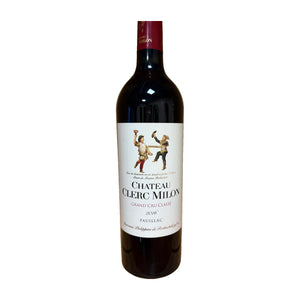
Bottle 75 cl · Wooden crate of 6
€92,40 per bottle
Couldn't load pickup availability
-
Shipped from Bordeaux Free delivery from 12 bottles in mainland France, packed and checked at our warehouse
-
Stored at the right temperature All our wines wait for your order in a temperature-controlled warehouse
-
Breakage covered Bottle broken on delivery: replaced or refunded
-
A question about this wine? 05 56 50 50 30 or ask us to call you back
Available vintages
Visit the vineyards: a day in Pauillac
View full details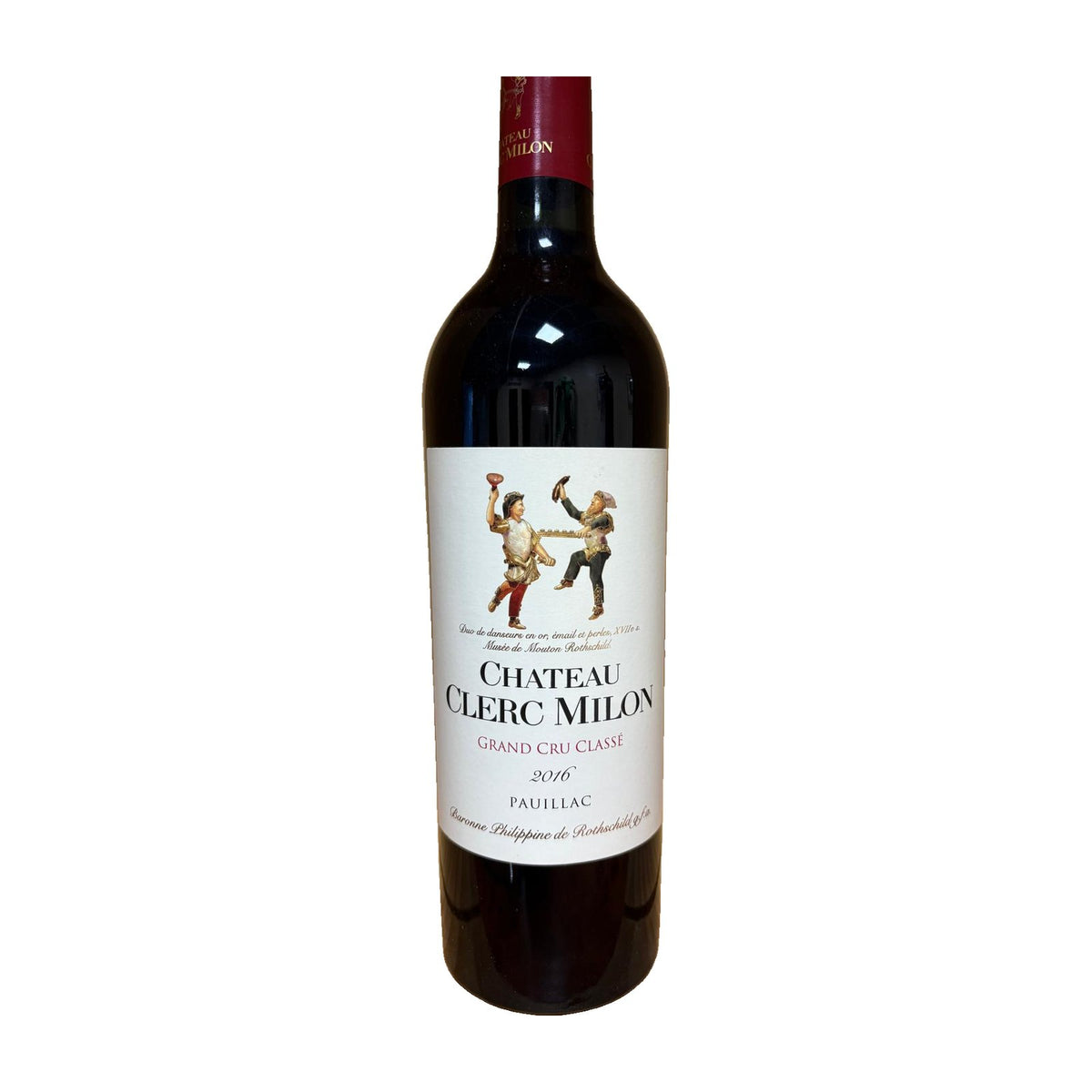

Château Clerc Milon 2016
Tasting notes forChâteau Clerc Milon 2016
— Tasting note, Château Clerc Milon
Critic scores
- 96/100 James Suckling
- 94/100 Wine Spectator
- 96/100 Decanter
- 94/100 Wine Advocate - Robert Parker
- 93/100 Vinous - A. Galloni
- 96/100 Bettane Desseauve
Grape varieties
- Cabernet Sauvignon 55%
- Merlot 29%
- Cabernet Franc 13%
- Petit Verdot 2%
- Carmenère 1%
Food pairing forChâteau Clerc Milon 2016
- Lamb
- Capon, Christmas turkey
Details
- Vintage
- 2016
- Colour
- Red
- Region
- Bordeaux, Médoc
- Appellation
- Pauillac
- Classification
- 5th Grand Cru Classé in 1855
- Estate
- Château Clerc Milon
- Alcohol
- 13,5 % vol.
- Ageing
- 16 months in barrels.
- Sizes
- Bottle 75 cl
- Drinking window
- 2024 – 2041 — Ready to drink until 2041
- Serving temperature
- 16 to 17 °C — Decant 1 to 2 hours before serving
The Pauillac appellation

The estate
5th Grand Cru Classé in 1855, Pauillac.
More wines from Pauillac
-
Bottle 75 cl · Wooden crate of 6
€92,40 per bottle
€554,40 -

Bottle 75 cl · Wooden crate of 6
€98,40 per bottle
€590,40 -

Bottle 75 cl · Wooden case of 12
€85,20 per bottle
€1.022,40 -
Bottle 75 cl · Wooden crate of 6
€110,40 per bottle
€662,40 -

Bottle 75 cl · Wooden case of 12
€66,00 per bottle
€792,00 -

Bottle 75 cl · Wooden crate of 6
€64,80 per bottle
€388,80


