

-
Château Latour 1988
Bottle 75 cl · By the bottle
Regular price €542,40
Bottle 75 cl · By the bottle
€542,40 -
Château Latour 1992
Bottle 75 cl · By the bottle
Regular price €434,40
Bottle 75 cl · By the bottle
€434,40 -
1993 Château Latour
Bottle 75 cl · By the bottle
Regular price €434,40
Bottle 75 cl · By the bottle
€434,40 -
Château Latour 1994
Bottle 75 cl · By the bottle
Regular price €482,40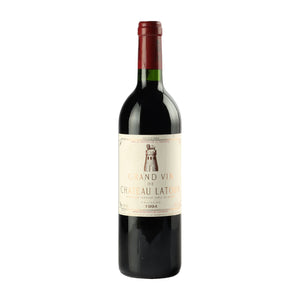
Bottle 75 cl · By the bottle
€482,40 -
Château Latour 1998
Bottle 75 cl · By the bottle
Regular price €566,40
Bottle 75 cl · By the bottle
€566,40 -
Château Latour 1999
Bottle 75 cl · By the bottle
Regular price €542,40
Bottle 75 cl · By the bottle
€542,40


Pauillac · 1st Grand Cru Classé in 1855
Two wines, one property
Same estate, same team, two distinct uses.
Château Latour
The grand vin, from the Enclos, the vineyard that surrounds the tower on the banks of the Gironde, at the border of Saint-Julien. The vast majority is Cabernet Sauvignon. The slowest of the first growths to open up: at least fifteen years, with fifty and more of excellent aging potential.
Les Forts de Latour
The second wine, ready in about eight to ten years; since Latour stopped selling en primeur, it too is released when the château deems it ready. Not currently at list price: upon request, with no guarantee of availability.
François Pinault has owned Latour since 1993. In 2012, the château ceased selling its wines en primeur: it keeps them in the cellar and releases them for sale years later. The tower on the label recalls an old fort; the one seen in the middle of the vines is a 17th-century dovecote. Immediate neighbors: Léoville Las Cases, in Saint-Julien, and Pichon Baron. Other châteaux of the appellation are on the Pauillac wines page.
The Enclos covers 47 of the estate's 96.5 hectares: a gravel rise that climbs up to 16 meters above the Gironde, 300 meters from the estuary. At its heart are clay-gravel soils where roots descend as deep as 3 meters; on the periphery, gravelly sands reserved for Merlot. The vineyard consists of approximately 76% Cabernet Sauvignon, 22% Merlot, and 2% Petit Verdot. The château classifies 1988 as a great classic year, following a very dry August and September. 1998, harvested between rain showers, remains a vintage for laying down, with fruit similar to 1988 but riper. 1999 is rated as a very good year.
What to serve it with
- A vintage over twenty years old: game meat, venison or hare (which wine with game), dry-aged rib steak (which wine with beef).
- Les Forts de Latour: Pauillac lamb (which wine with lamb), entrecôte bordelaise.
- With cheese: an aged Comté, an extra-aged Mimolette (which wine with cheese).
Which vintage for which occasion
In magnum, for a table of ten or as a gift: the format ages more slowly and stands out. A Latour less than fifteen years old is almost always opened too early.
Frequently Asked Questions
Is Château Latour a Grand Cru Classé?
Yes. It is a First Grand Cru Classé in the 1855 classification, in the Pauillac appellation. Les Forts de Latour, its second wine, is not classified.
Why does Latour no longer sell en primeur?
Since the 2012 vintage, the château keeps its wines in the cellar and sells them when it deems them ready, years after the harvest. The buyer pays for an older wine, stored at the château, with impeccable provenance.
When should you drink a Château Latour?
Count on fifteen years before opening it and fifty years of good aging potential, a little longer in a great year, a little less in a weak year or in a half-bottle; for Les Forts, eight to twenty-five years.
Can't find your wine?
The shop shows only part of what we can offer. As a Bordeaux wholesaler, Transvins works with the châteaux and the Bordeaux trade: tell us the wine and vintage you are after, we will look for it and reply with availability and price.