


Collection: Graves and Sauternes region
-
Domaine de Chevalier white 2016
Bottle 75 cl · Wooden case of 12
Regular price €1.224,00
Bottle 75 cl · Wooden case of 12
€102,00 per bottle
€1.224,00 -
Domaine de Chevalier white 2018
Bottle 75 cl · Wooden case of 12
Regular price €1.137,60
Bottle 75 cl · Wooden case of 12
€94,80 per bottle
€1.137,60 -
Domaine de Chevalier white 2020
Bottle 75 cl · Wooden case of 12
Regular price €1.108,80
Bottle 75 cl · Wooden case of 12
€92,40 per bottle
€1.108,80 -
Domaine de Chevalier Blanc 2022
Bottle 75 cl · Wooden crate of 6
Regular price €626,40
Bottle 75 cl · Wooden crate of 6
€104,40 per bottle
€626,40 -
Domaine de Chevalier red 2003
Bottle 75 cl · Wooden crate of 6
Regular price €367,20
Bottle 75 cl · Wooden crate of 6
€61,20 per bottle
€367,20 -
Domaine de Chevalier red 2004
Bottle 75 cl · Wooden crate of 6
Regular price €432,00
Bottle 75 cl · Wooden crate of 6
€72,00 per bottle
€432,00 -
Domaine de Chevalier red 2008
Bottle 75 cl · Wooden crate of 6
Regular price €482,40
Bottle 75 cl · Wooden crate of 6
€80,40 per bottle
€482,40 -
2012 Domaine de Chevalier rouge
Bottle 75 cl · Wooden case of 12
Regular price €864,00
Bottle 75 cl · Wooden case of 12
€72,00 per bottle
€864,00 -
Domaine de Chevalier red 2014
Magnum 1.5 L · Wooden crate of 6
Regular price €784,80
Magnum 1.5 L · Wooden crate of 6
€130,80 per bottle
€784,80 -
Domaine de Chevalier red 2016
Bottle 75 cl · Wooden case of 12
Regular price €892,80
Bottle 75 cl · Wooden case of 12
€74,40 per bottle
€892,80 -
Domaine de Chevalier red 2018
Bottle 75 cl · Wooden case of 12
Regular price €878,40
Bottle 75 cl · Wooden case of 12
€73,20 per bottle
€878,40 -
L'Esprit de Chevalier 2019
Bottle 75 cl · Pack of 6
Regular price €144,00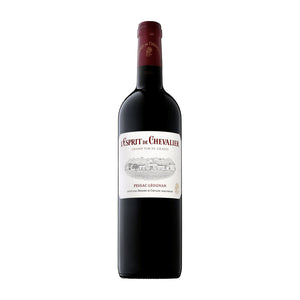
Bottle 75 cl · Pack of 6
€24,00 per bottle
€144,00 -
L'Esprit de Chevalier 2020
Bottle 75 cl · Pack of 6
Regular price €144,00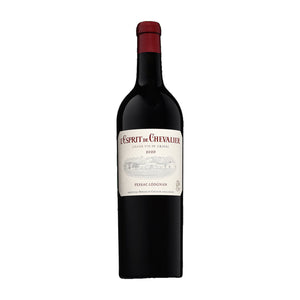
Bottle 75 cl · Pack of 6
€24,00 per bottle
€144,00 -
2016 Malartic Reserve
Bottle 75 cl · Wooden case of 12
Regular price €273,60
Bottle 75 cl · Wooden case of 12
€22,80 per bottle
€273,60


74 of 74 wines
Left Bank · Graves and Sauternais · red, white, and sweet wines
South of Bordeaux, along the left bank of the Garonne, the Graves region produces all three colors of Bordeaux: reds, some of the region's best dry whites, and, to the south, the sweet wines of Sauternes and Barsac.
The Appellations
From north to south:
Pessac-Léognan
The northern part of the Graves, from the outskirts of Bordeaux to the pine forests of Léognan, an appellation since 1987. Reds that are more supple than those of the Médoc and great white wines capable of aging. All sixteen of the Graves cru classé estates are located here, led by Haut-Brion. Pessac-Léognan wines
Graves
The remainder of the left bank reaching around Langon: reds made from Cabernet Sauvignon and Merlot, and dry whites made from Sauvignon Blanc and Sémillon, at more accessible prices. Graves wines
Sauternes and Barsac
Nestled in the south of the Graves, where the Ciron joins the Garonne: "noble rot" produces sweet wines here that can be aged for decades, led by Yquem. Sauternes and Barsac wines
What makes a Graves wine
The "graves" (gravel, pebbles, and sand rolled by the Garonne) gave the region its name. The reds are blends of Cabernet Sauvignon and Merlot, with more Merlot than in the Médoc; the dry whites, made from Sauvignon Blanc and Sémillon, are often barrel-aged. It is one of the rare parts of Bordeaux as well-known for its whites as for its reds.
Two classifications overlap here: the Graves classification of 1953 (revised in 1959) for red and white wines, and the 1855 classification for the sweet wines of Sauternes and Barsac. Haut-Brion is included in both. Further details can be found on the Bordeaux classifications page. The Médoc begins north of the city: see Médoc wines.
Frequently Asked Questions
Graves or Pessac-Léognan: what is the difference?
Pessac-Léognan is the northern part of the Graves, which became a separate appellation in 1987; all the Graves cru classé estates are located there. The Graves appellation covers the rest, further south, with more accessible prices.
What is noble rot?
A fungus, Botrytis, which develops on ripe grapes when autumn mornings are misty and afternoons are warm. It concentrates the sugar in the grapes, which are harvested in several passes as they are affected: low yields, and wines that keep for a very long time.
How long should a Graves wine be kept?
A simple dry white, one to six years; a classified red from Pessac-Léognan, six to twenty years, and its great whites twenty years. Sauternes can be kept for decades.
What should you serve with Sauternes?
Foie gras, blue cheeses like Roquefort, and fruit desserts. See what wine with foie gras.
Can't find your wine?
The shop shows only part of what we can offer. As a Bordeaux wholesaler, Transvins works with the châteaux and the Bordeaux trade: tell us the wine and vintage you are after, we will look for it and reply with availability and price.