


Collection: Pauillac
-
Carruades de Lafite 1993
Bottle 75 cl · By the bottle
Regular price €242,40
Bottle 75 cl · By the bottle
€242,40 -
Carruades de Lafite 2001
Bottle 75 cl · By the bottle
Regular price €302,40
Bottle 75 cl · By the bottle
€302,40 -
Carruades de Lafite 2008
Bottle 75 cl · By the bottle
Regular price €266,40
Bottle 75 cl · By the bottle
€266,40 -
Château Clerc Milon 2004
Half-bottle 37.5 cl · Wooden case of 12
Regular price €532,80
Half-bottle 37.5 cl · Wooden case of 12
€44,40 per bottle
€532,80 -
Château Clerc Milon 2012
Magnum 1.5 L · By the bottle
Regular price €178,80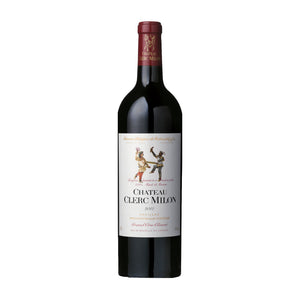
Magnum 1.5 L · By the bottle
€178,80 -
Château Clerc Milon 2015
Bottle 75 cl · Wooden crate of 6
Regular price €518,40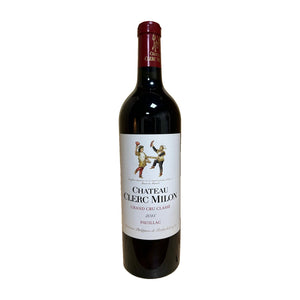
Bottle 75 cl · Wooden crate of 6
€86,40 per bottle
€518,40 -
Château Clerc Milon 2016
Bottle 75 cl · Wooden crate of 6
Regular price €554,40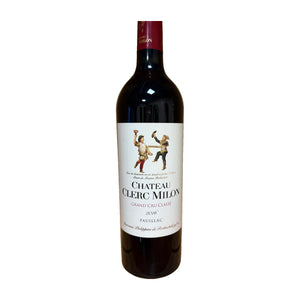
Bottle 75 cl · Wooden crate of 6
€92,40 per bottle
€554,40 -
Château Duhart-Milon 2008
Bottle 75 cl · Wooden crate of 6
Regular price €554,40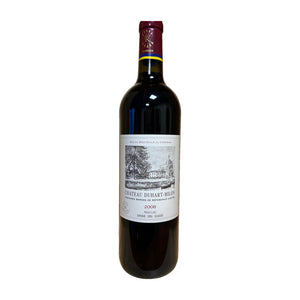
Bottle 75 cl · Wooden crate of 6
€92,40 per bottle
€554,40 -
Château Duhart-Milon 2012
Bottle 75 cl · Wooden crate of 6
Regular price €446,40
Bottle 75 cl · Wooden crate of 6
€74,40 per bottle
€446,40 -
2016 Château Duhart-Milon
Bottle 75 cl · Wooden crate of 6
Regular price €475,20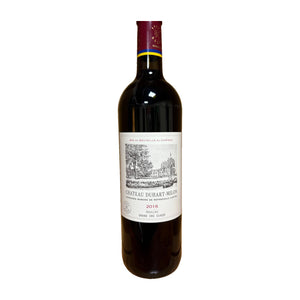
Bottle 75 cl · Wooden crate of 6
€79,20 per bottle
€475,20 -
Château d’Armailhac 2008
Bottle 75 cl · Wooden crate of 6
Regular price €388,80
Bottle 75 cl · Wooden crate of 6
€64,80 per bottle
€388,80 -
Château d'Armailhac 2011
Bottle 75 cl · Wooden crate of 6
Regular price €367,20
Bottle 75 cl · Wooden crate of 6
€61,20 per bottle
€367,20 -
Château d’Armailhac 2014
Bottle 75 cl · Wooden crate of 6
Regular price €367,20
Bottle 75 cl · Wooden crate of 6
€61,20 per bottle
€367,20 -
Château d'Armailhac 2016
Bottle 75 cl · Wooden crate of 6
Regular price €374,40
Bottle 75 cl · Wooden crate of 6
€62,40 per bottle
€374,40 -
Château Grand-Puy-Ducasse 2009
Bottle 75 cl · Wooden case of 12
Regular price €720,00
Bottle 75 cl · Wooden case of 12
€60,00 per bottle
€720,00 -
Château Grand-Puy-Ducasse 2015
Bottle 75 cl · Wooden case of 12
Regular price €432,00
Bottle 75 cl · Wooden case of 12
€36,00 per bottle
€432,00 -
Château Grand-Puy-Ducasse 2016
Bottle 75 cl · Wooden case of 12
Regular price €504,00
Bottle 75 cl · Wooden case of 12
€42,00 per bottle
€504,00 -
Château Grand-Puy-Lacoste 2016
Bottle 75 cl · Wooden case of 12
Regular price €1.022,40
Bottle 75 cl · Wooden case of 12
€85,20 per bottle
€1.022,40 -
Château Grand-Puy-Lacoste 2017
Bottle 75 cl · Wooden case of 12
Regular price €777,60
Bottle 75 cl · Wooden case of 12
€64,80 per bottle
€777,60 -
Château Grand-Puy-Lacoste 2018
Bottle 75 cl · Wooden case of 12
Regular price €849,60
Bottle 75 cl · Wooden case of 12
€70,80 per bottle
€849,60


20 of 55 wines
Load moreMédoc · Pauillac appellation · 18 classified growths, including 3 first growths
From second wine to first growth
Three of the five first growths of Médoc and Graves are in Pauillac.
Second wines
Carruades de Lafite, Lacoste-Borie: the younger vines of a classified growth. Yet the second wines of the first growths cost more than many classified growths.
Fifth growths
Grand-Puy-Ducasse, Haut-Batailley, d’Armailhac, Grand-Puy-Lacoste, Clerc Milon, Haut-Bages Libéral, and two that sell at the price of a second: Lynch-Bages and Pontet-Canet.
Fourth and second growths
Duhart-Milon, the only fourth growth of the appellation; the two Pichons, Pichon Baron and Pichon Comtesse, facing each other on the road of the châteaux.
First growths
Latour and Mouton Rothschild, promoted in 1973: wines with fifty years of aging potential, which are more of a treat than a drink. Lafite Rothschild, the third, is not on sale at the moment.
What makes a Pauillac
About 1,200 hectares between Saint-Julien to the south and Saint-Estèphe to the north, on deep gravel slopes along the Gironde. Cabernet Sauvignon dominates here more than anywhere else, with Merlot. The wines are the most structured of Médoc: blackcurrant, cedar, firm tannins, and long aging potential. Only reds.
To the south begins Saint-Julien, a little softer: see the wines of Saint-Julien.
What to serve it with
- Pauillac lamb, raised near the vineyards, is the appellation's pairing: roasted, as a leg, or as a rack of lamb (what wine with lamb).
- A classified growth of ten years or more: ribeye steak (what wine with beef), game (what wine with game).
- A young second wine or fifth growth: duck breast (what wine with duck), pressed cheeses (what wine with cheese).
Which Pauillac for which occasion
For a wedding, a fifth growth or a second wine on the tables, a higher-ranked growth for the head table (what Bordeaux for a wedding). For a birthday, the birth year: birth vintage. As a gift, a first growth or its second, in a wooden crate (what wine to gift).
Frequently asked questions
How many classified growths does the Pauillac appellation count?
Eighteen in the 1855 classification: three first growths (Lafite Rothschild, Latour, Mouton Rothschild), two second growths (Pichon Baron and Pichon Comtesse), one fourth growth (Duhart-Milon) and twelve fifth growths. No third growths.
What is the difference between a Pauillac and a Saint-Julien?
Same bank, same dominant grape, but deeper gravel in Pauillac and a higher proportion of Cabernet Sauvignon: the wines are more powerful and require more time. Saint-Julien is often ready earlier.
How long to age a Pauillac?
Four to fifteen years for a second wine, eight to twenty-five for a fifth growth, ten to thirty-five for the most sought-after second and fifth growths, fifteen to fifty for the first growths. A little more in a great year, a little less in a weak year.
On site: a day in Pauillac, the châteaux that receive visitors, where to have lunch, and the pickup of your order in Bordeaux on your return.
Can't find your wine?
The shop shows only part of what we can offer. As a Bordeaux wholesaler, Transvins works with the châteaux and the Bordeaux trade: tell us the wine and vintage you are after, we will look for it and reply with availability and price.