


Collection: Saint-Julien
-
2004 Château Talbot
Regular price €1.065,60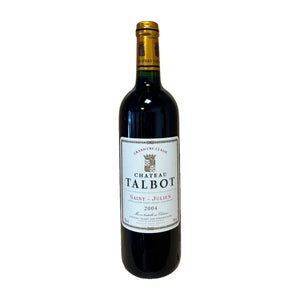
Half-bottle 37.5 cl · Wooden crate of 24
€44,40 per bottle
€1.065,60Bottle 75 cl · Wooden case of 12
€74,40 per bottle
€892,80 -
Château Talbot 2006
Regular price €482,40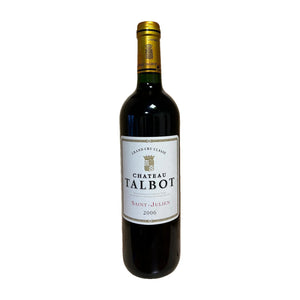
Bottle 75 cl · Wooden crate of 6
€80,40 per bottle
€482,40Bottle 75 cl · Wooden case of 12
€80,40 per bottle
€964,80 -
Château Talbot 2008
Bottle 75 cl · Wooden case of 12
Regular price €1.108,80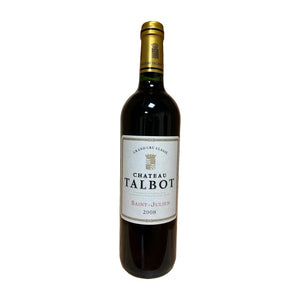
Bottle 75 cl · Wooden case of 12
€92,40 per bottle
€1.108,80 -
2010 Château Talbot
Bottle 75 cl · Wooden crate of 6
Regular price €662,40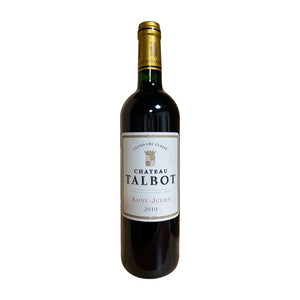
Bottle 75 cl · Wooden crate of 6
€110,40 per bottle
€662,40 -
Château Talbot 2014
Bottle 75 cl · Wooden crate of 6
Regular price €410,40
Bottle 75 cl · Wooden crate of 6
€68,40 per bottle
€410,40 -
Château Talbot 2020
Bottle 75 cl · Wooden case of 12
Regular price €705,60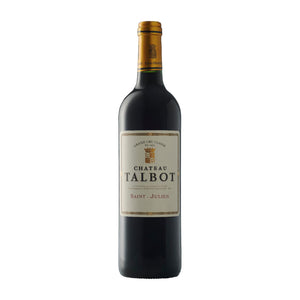
Bottle 75 cl · Wooden case of 12
€58,80 per bottle
€705,60 -
Connétable de Talbot 2012
Bottle 75 cl · Wooden case of 12
Regular price €338,40
Bottle 75 cl · Wooden case of 12
€28,20 per bottle
€338,40 -
Connétable de Talbot 2017
Bottle 75 cl · Wooden case of 12
Regular price €316,80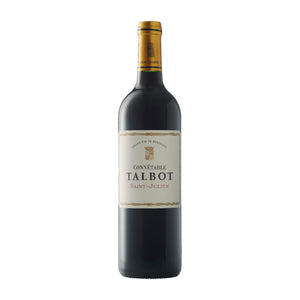
Bottle 75 cl · Wooden case of 12
€26,40 per bottle
€316,80 -
Connétable de Talbot 2018
Bottle 75 cl · Wooden case of 12
Regular price €345,60
Bottle 75 cl · Wooden case of 12
€28,80 per bottle
€345,60 -
Connétable de Talbot 2019
Bottle 75 cl · Wooden case of 12
Regular price €338,40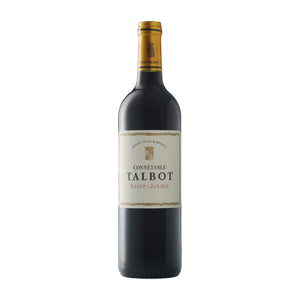
Bottle 75 cl · Wooden case of 12
€28,20 per bottle
€338,40 -
Connétable de Talbot 2020
Bottle 75 cl · Wooden case of 12
Regular price €345,60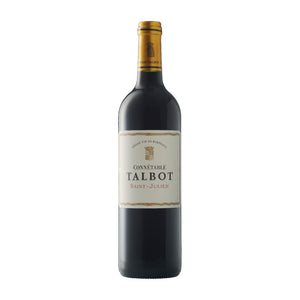
Bottle 75 cl · Wooden case of 12
€28,80 per bottle
€345,60 -
Duluc de Branaire-Ducru 2011
Bottle 75 cl · Wooden case of 12
Regular price €302,40
Bottle 75 cl · Wooden case of 12
€25,20 per bottle
€302,40 -
Duluc de Branaire-Ducru 2014
Bottle 75 cl · Wooden case of 12
Regular price €302,40
Bottle 75 cl · Wooden case of 12
€25,20 per bottle
€302,40 -
Duluc de Branaire-Ducru 2015
Bottle 75 cl · Wooden case of 12
Regular price €331,20
Bottle 75 cl · Wooden case of 12
€27,60 per bottle
€331,20 -
Duluc de Branaire-Ducru 2019
Bottle 75 cl · Pack of 6
Regular price €136,80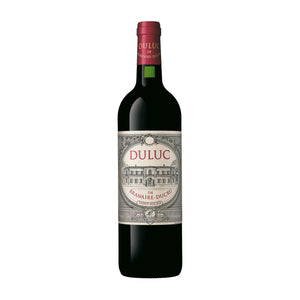
Bottle 75 cl · Pack of 6
€22,80 per bottle
€136,80 -
Les Fiefs de Lagrange 2017
Bottle 75 cl · Wooden case of 12
Regular price €295,20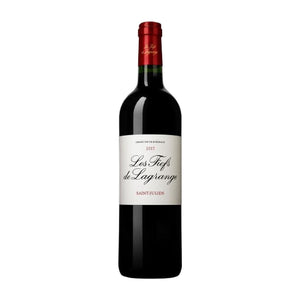
Bottle 75 cl · Wooden case of 12
€24,60 per bottle
€295,20 -
Les Fiefs de Lagrange 2018
Bottle 75 cl · Wooden case of 12
Regular price €309,60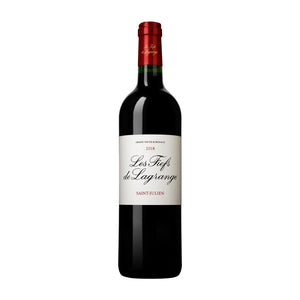
Bottle 75 cl · Wooden case of 12
€25,80 per bottle
€309,60


57 of 57 wines
Médoc · Saint-Julien appellation · 11 estates classified in 1855
From second wine to second growth
No first growth in Saint-Julien, but the highest proportion of classified estates in the Médoc.
Second wines
Connétable de Talbot, Duluc de Branaire-Ducru, Les Fiefs de Lagrange: the younger vines of a classified estate, ready after about three or four years. The Saint-Julien for a wedding meal.
Unclassified
Château Gloria: an estate made up of plots from classified estates, but never classified itself. Ready after about five years, at the price of a second wine.
Third and fourth growths
Lagrange, Talbot, Branaire-Ducru, Saint-Pierre, Beychevelle: classified estates ready after about eight years, which last twenty-five years.
Second growths
Léoville Las Cases, Ducru-Beaucaillou, Léoville Barton, Gruaud Larose: long-aged wines, to be opened after ten years.
What makes a Saint-Julien
The appellation, covering just over 900 hectares between Margaux to the south and Pauillac to the north, is the smallest of the four major communal appellations in the Médoc and the most homogeneous: three-quarters of its vineyards belong to classified estates. Gravel slopes along the Gironde, mostly Cabernet Sauvignon, with Merlot. The style lies between its two neighbors: more structure than Margaux, more suppleness than Pauillac.
To the south begins Margaux: see Margaux wines.
What to serve it with
- A second growth of fifteen years or more: roast lamb, saddle of lamb, leg of lamb (what wine with lamb), game birds (what wine with game).
- A third or fourth growth of eight to fifteen years: fillet or rib of beef (what wine with beef).
- A second wine or Gloria: duck breast (what wine with duck), roast poultry (what wine with poultry), pressed cheeses (what wine with cheese).
Which Saint-Julien for which occasion
For a wedding, a second wine or Gloria at every table, and a classified estate for the head table: the page on which Bordeaux for a wedding compares the appellations, and the second wine of a great château says when this is the right choice. For a birthday, the birth year: the birth vintage page says what can still be drunk. As a gift, a classified estate in its original wooden case.
Frequently asked questions
How many classified estates are in the Saint-Julien appellation?
Eleven in the 1855 classification: five second growths (the three Léovilles, Gruaud Larose, Ducru-Beaucaillou), two third growths (Lagrange, Langoa Barton), and four fourth growths (Beychevelle, Branaire-Ducru, Saint-Pierre, Talbot). No first growths, no fifth growths.
Saint-Julien or Saint-Julien-Beychevelle?
The commune is called Saint-Julien-Beychevelle; the appellation is called Saint-Julien. It is the same vineyard.
How long to keep a Saint-Julien?
Three to twelve years for a second wine, five to eighteen for Gloria, eight to twenty-five for a third or fourth growth, ten to thirty-five or more for a second growth. A little longer for a great vintage, a little less for a weak vintage or a half-bottle.
Is there a white Saint-Julien?
No. The Saint-Julien appellation only applies to red wines. The white wines from its châteaux, such as Caillou Blanc de Talbot or Les Arums de Lagrange, are released under the Bordeaux appellation.
On site: a day in Saint-Julien, the châteaux that welcome visitors, where to have lunch, and the collection of your order in Bordeaux on your return.
Can't find your wine?
The shop shows only part of what we can offer. As a Bordeaux wholesaler, Transvins works with the châteaux and the Bordeaux trade: tell us the wine and vintage you are after, we will look for it and reply with availability and price.